
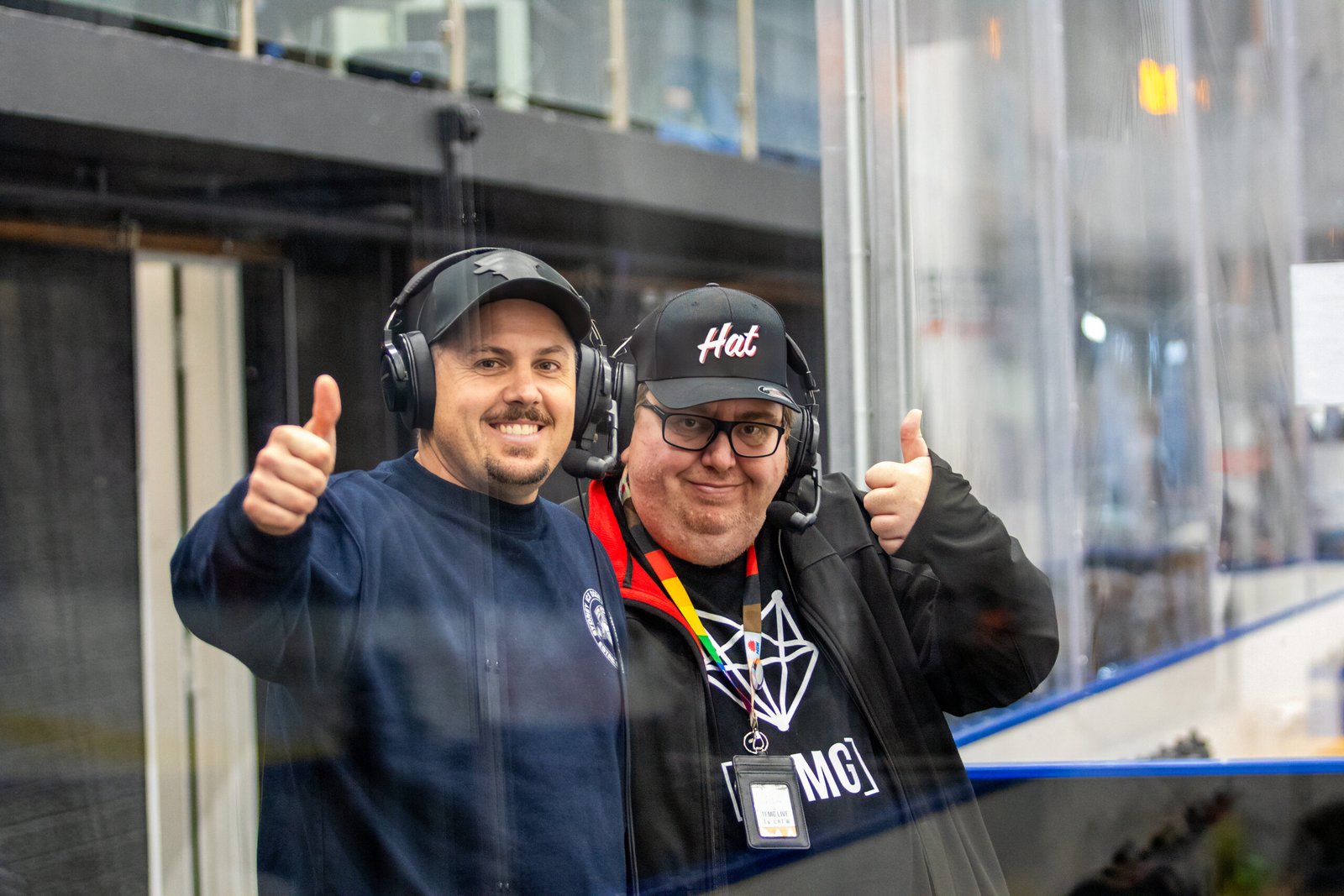
I have always thought life is a collection of moments that our lives are built around. But I never thought it would steer me into Australian Ice Hockey League (AIHL) commentary.
After 16 years of covering the league as a journalist, I was given the opportunity alongside Oliver Walker-Peel to call Sydney Ice Dogs home games during the 2026 season.
What started out as another moment in my journey in Australian hockey became something that would hold far more meaning in my media career.
My relationship with Thought Fox Media Group (TFMG) wasn’t new. I had previously worked with the team as play-by-play commentator of the Australian Women’s Ice Hockey League (AWIHL).
However, it was different this time. I was becoming part of the TFMG organisation, not simply working alongside them.
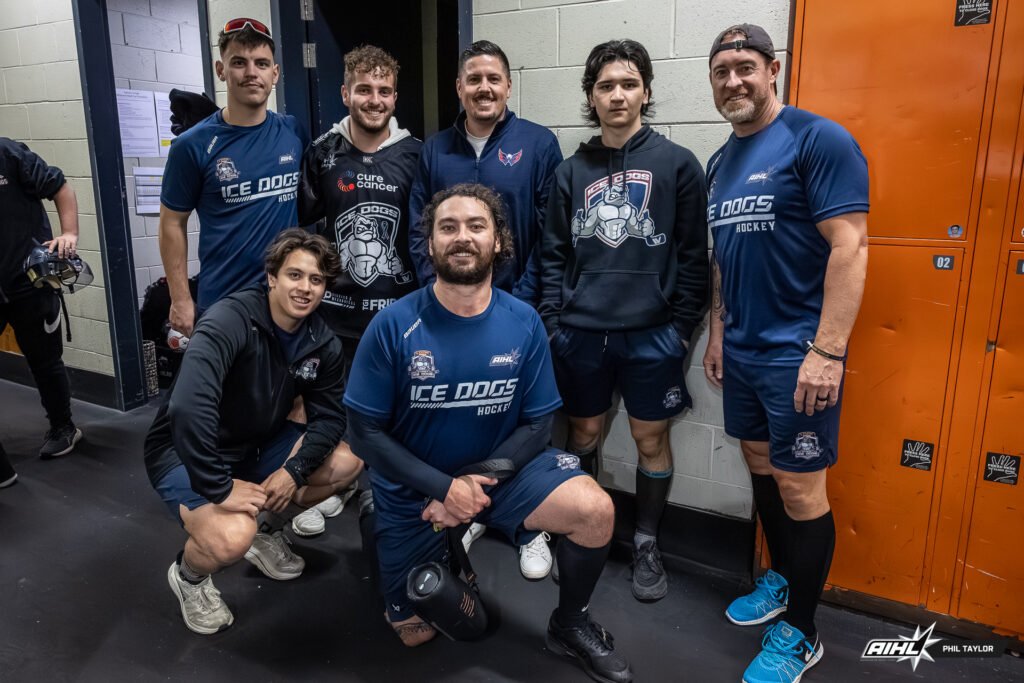
Part of the Dogs family
Being the colour commentator for Sydney Ice Dogs home games opened the door to different relationships that I would build with the team.
Previously, I had covered players and coaches as a journalist. Now I was spending some time around the group, learning their personalities and riding the highs and lows of a season with genuine connection.
To me, it wasn’t just about watching the games, I became part of the experience.
Building that bond changed the way I would approach commentary. Knowing coaches, players and off ice staff, it gives me a deeper understanding of the team to bring more context and personality to the broadcast.
When the final horn sounded to end the AIHL regular season, the Ice Dogs weren’t just a team I was covering. They became a club I was proud to be part of.
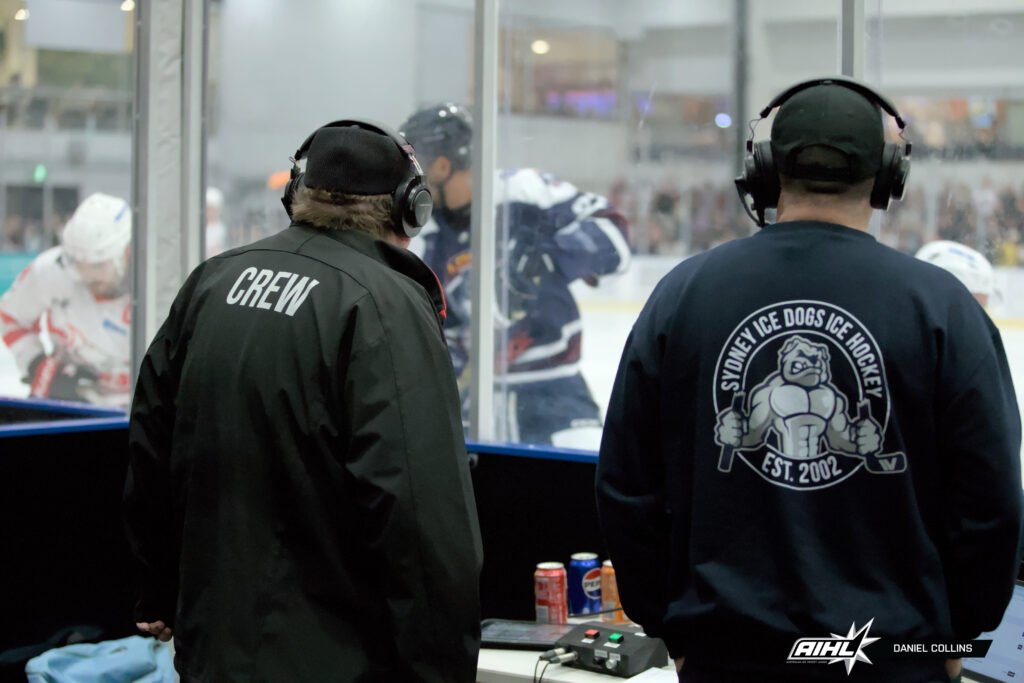
When ESPN Came Calling
And as life continues to pile up moments, my first year coincided with an ESPN call from Macquarie Ice Rink.
It was a moment where I stopped and stood still.
Which wasn’t because I hadn’t thought about commentating games, but because of what the opportunity meant to the AIHL.
For 16 years, my perspective of Australian hockey came from a different lens. I had written about it, interviewed players and coaches, toured different rinks around the country trying to put into words what was happening.
Now I was being tasked with telling the story in real time.
Commentary holds different responsibilities than journalism.
You can sit with a story, moment or angle as a journalist. Rewrite a sentence, adjust paragraphs, grab quotes and take time to think about the moment and story you want to tell.
Sitting in a commentary booth, the game doesn’t wait for you.
As the puck moves and play develops, suddenly your thoughts and observations of that moment need to be communicated to the people at home.
The challenges of commentary are completely different.
And I love it.
Of course there were nerves, moments where I made mistakes, times where I would speak too quickly or said too much.
Then there are moments where it all comes naturally – where the game completely slows down, giving space to have the right words and the realisation you can do this.
Two Voices, One Broadcast
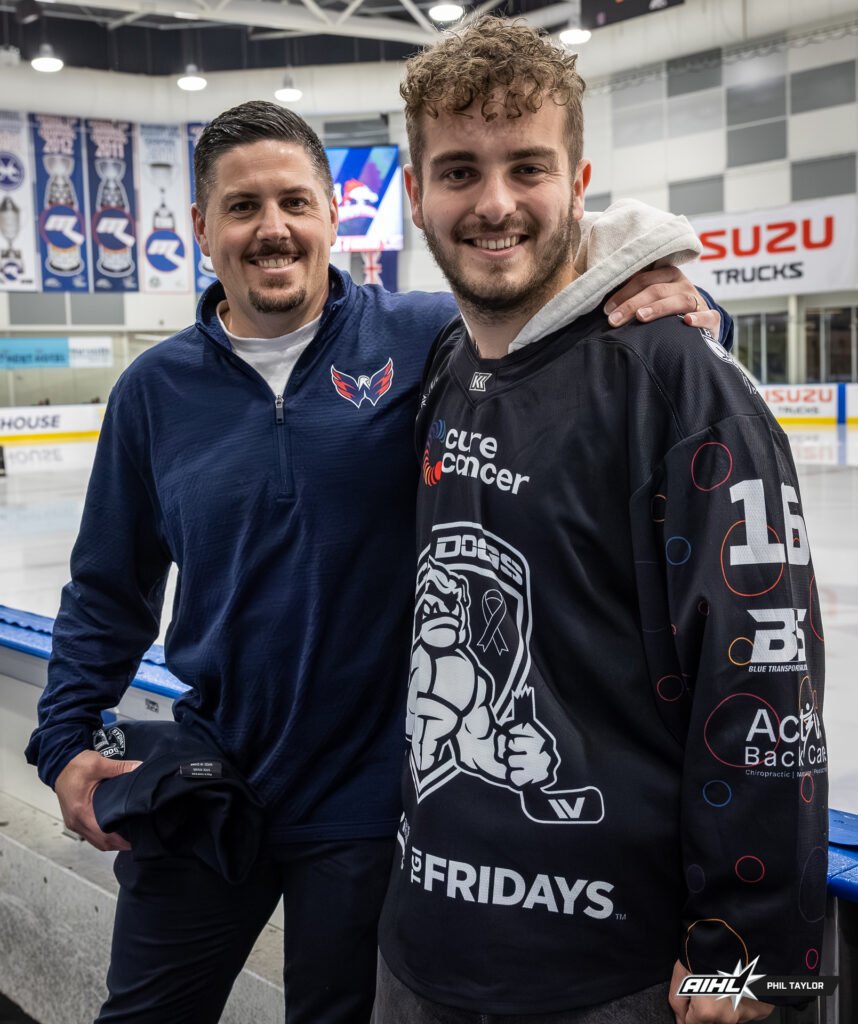
The experience was improved by having Ollie alongside me.
Commentary is not a one-man show, it’s a partnership. You feed off each other, learning when to speak, when to listen or let a big moment breathe.
As each game went by we both found our rhythm.
As the season progressed, I was no longer a journalist commentating. Instead, I felt like a commentator who had been telling Australian hockey stories for 16 years.
Then the big moment came. ESPN.
Calling the ESPN game from a redeveloped Macquarie Ice Rink was another moment where I sat back thinking about the journey.
When I decided I’d invest my time, money and effort into covering Australian hockey there wasn’t a five, ten or 16-year plan that ended with me sitting with a microphone calling games on an international sports network.
That moment just happened.
It began with one opportunity.
A person opening the door for me.
Each moment becoming the next.
This, I think, is why the journey to sitting behind a microphone is so special.
Built on Moments and People
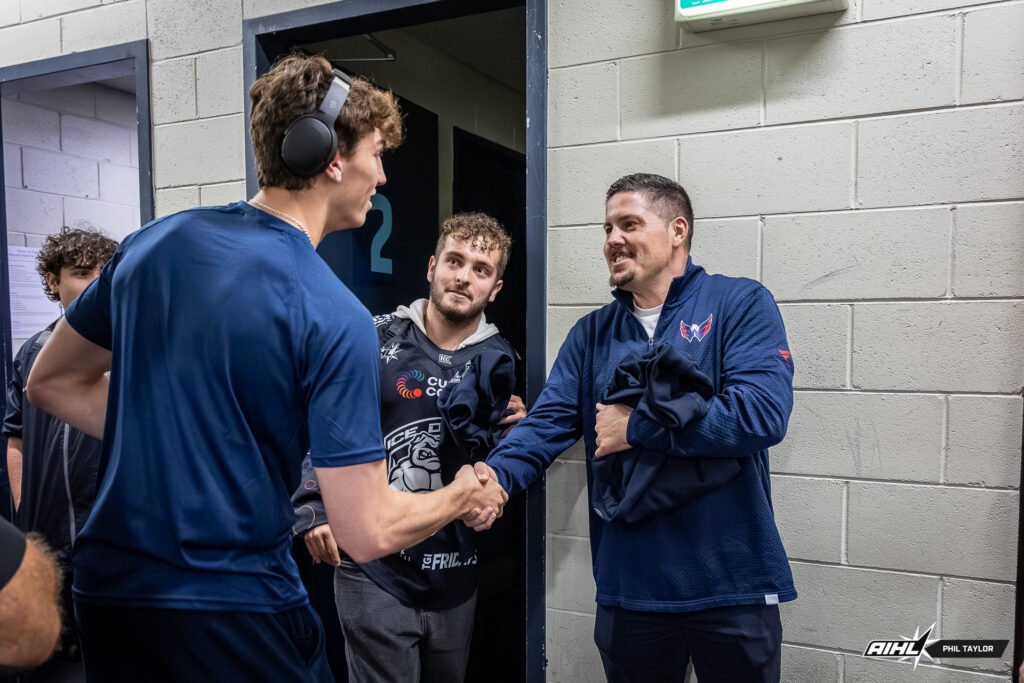
It was never just about the games when it came to Australian hockey. It’s all the people you meet along the way, friendships you find in unique places, stories you get to share and opportunities being created just from showing up.
Sixteen years of covering the sport had led me into a commentary booth.
And looking back on it all it doesn’t feel like I have left journalism behind.
Everything I have learned from writing about hockey I have taken with me.
Curiosity. Preparation.
But most importantly, getting to know the people behind the story.
You understand that each game has a narrative, each player has their own journey to being there.
Sitting behind a microphone has now given me a different way to tell the stories I have written about.
The People Who Got Me Here
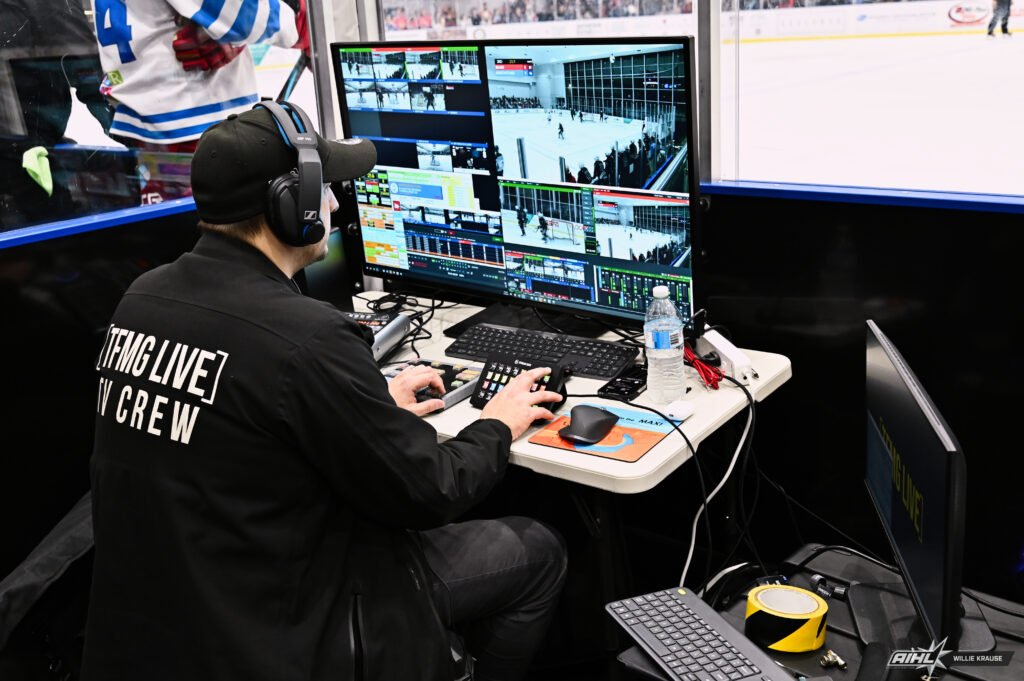
I’ll be forever grateful to Michael Smith and the TFMG team for trusting me.
To Ollie, thank you for sharing these moments and making the first year one to remember.
Everyone who has been part of my journey over 16 years covering Australian hockey – players, coaches, colleagues in media or volunteers at the rink – thank you.
You are all part of that collection of moments.
I don’t know what the future holds, I try not to worry about things out of my control.
However, sometimes the best journeys are the ones that you don’t plan for.
Sixteen years ago, I was trying to give Australian hockey a voice, tell a story.
Today, my voice gets to tell that story behind a microphone.
And that moment is something that is pretty special to reflect on.